market intelligence
The Billion Meal Dates Factory in Margham
Construction has started on a dates factory in Dubai endowed entirely to humanitarian use, due for completion in 2027. Here is what has been announced about how it is structured and what it is designed to do.
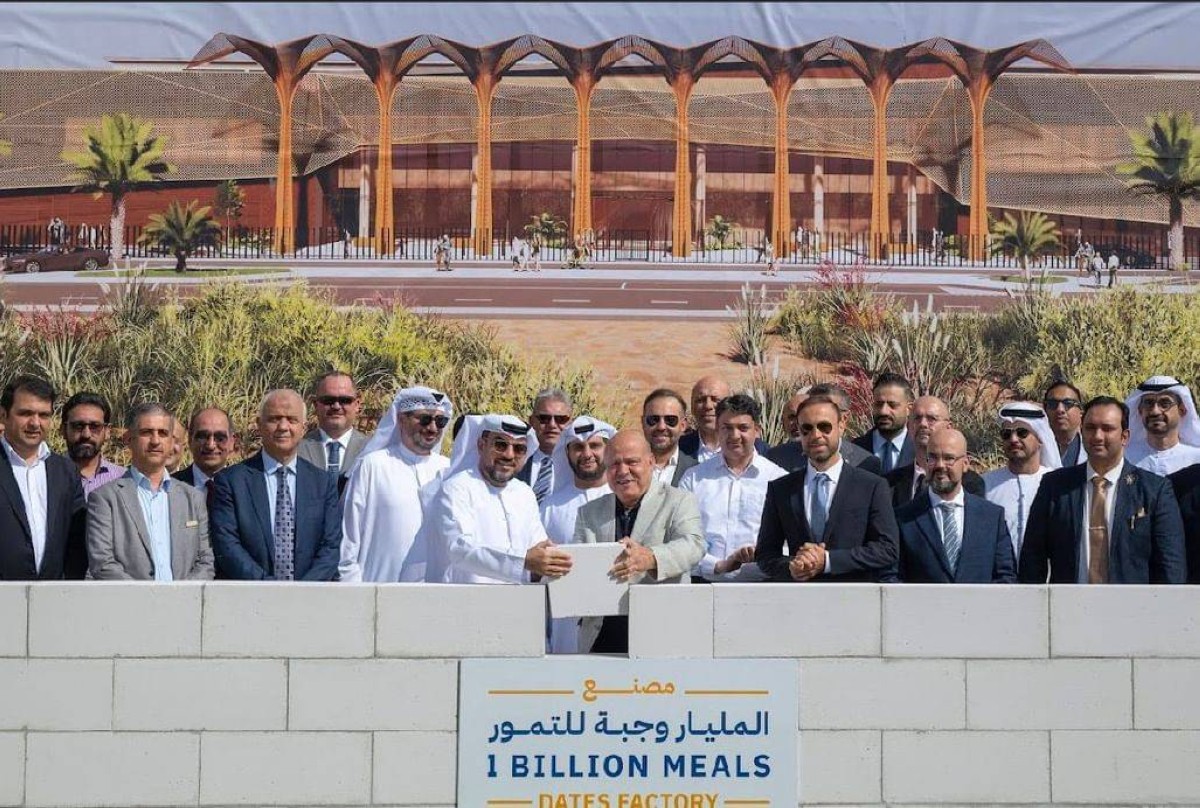
Construction work began this week in the Margham area of Dubai on the Billion Meal Dates Factory, a project launched by His Highness Sheikh Mohammed bin Rashid Al Maktoum and described as the largest waqf project of its kind in the world. It is designed to produce and package dates for humanitarian purposes at a total capacity of 150 million food units a year, and is due for completion in 2027.
Who is involved
The project sits under the Mohammed bin Rashid Al Maktoum Global Initiatives foundation, which was established in 2015 as an umbrella for initiatives His Highness had sponsored over the preceding two decades. The foundation now covers more than thirty initiatives and institutions working across five areas: humanitarian and relief aid, healthcare and disease control, education and knowledge, innovation and entrepreneurship, and community empowerment.
The AED 200 million construction cost is being contributed by the businessman Mirwais Azizi, chairman of Azizi Developments. Operational expertise comes from the dates producer Al Baraka. The groundbreaking was attended by Saeed Al Eter, Chief Executive of the foundation, alongside Mirwais Azizi.
Mohammad Abdullah Al Gergawi, Secretary General of the foundation, described the launch as a humanitarian message from the Emirates and said that giving in the UAE continues through challenges rather than stopping at them, growing instead into sustainable humanitarian assets that remain for future generations.
Mirwais Azizi said the project sets new standards for global humanitarian work and described the AED 200 million commitment as a message of solidarity with international efforts to end hunger.
What the factory is designed to do
The structure is an industrial waqf — an endowment in which the productive asset itself is permanently dedicated to a purpose. In this case the entire production capacity, described as one hundred per cent, is allocated to humanitarian work rather than sold commercially.
The stated intent is to move relief provision away from distributing donated food and towards a continuous production system, so that supply flows with consistency and efficiency rather than in response to individual appeals. The announcement links this to the United Nations Sustainable Development Goals for 2030, with hunger as the primary target.
Output is planned at 150 million units a year of dates fortified with vitamins and essential minerals. The nutritional formulation is aimed specifically at malnutrition, with the factory intended to function as a production centre for complete, high-value meals suited to urgent relief needs.
The entire production capacity is allocated to humanitarian work rather than sold commercially.
The agricultural side
The factory is designed to run entirely on locally grown dates as its raw material. According to the announcement, this is intended to open a sustainable market for Emirati farmers and encourage investment in expanding cultivated area.
The stated aim is to support environmental sustainability and the country's agricultural identity, shifting the palm tree from a heritage symbol and local food security crop towards a production input feeding humanitarian supply chains internationally.
The foundation's remit
The Mohammed bin Rashid Al Maktoum Global Initiatives foundation carries out hundreds of projects, programmes and campaigns across its five areas of work. Its stated aims include promoting a culture of hope and addressing humanitarian, developmental and social problems in regions around the world.
Much of that work centres on human capital — developing talent, building skills and expertise, and producing educated and trained people across development fields so they can contribute to progress in their own countries. The foundation also works on improving education in marginalised and deprived communities, on poverty, disease and epidemics, and on promoting tolerance and coexistence between peoples.
Where things stand
Construction is under way and completion is scheduled for 2027. The figures announced are a build cost of AED 200 million, an annual capacity of 150 million fortified food units, and full allocation of that output to humanitarian distribution.
Anything beyond that — how the endowment will be administered over time, which distribution partners will handle the output, how the offtake arrangements with local farmers will be structured — has not been detailed publicly at this stage.